
AI File & Document Management

AI File Organizer
for Researchers

Automatically organize research papers, datasets, lab notes, and literature reviews by topic.

No credit card required Β· Free plan included

|
10+
hours saved monthly on manual filing
3 sec
to find any file with AI search
100%
of files organized automatically

File sprawl is killing your productivity
β€” and AI can't help without context.

Messy files mean missed deadlines, lost work, and frustrated teams.

2.5 hours

wasted daily searching & organizing files

File Chaos

60%

of work context is lost in scattered files

Lost Context

73%

of teams struggle with inconsistent file names

Naming Confusion

How It Works

Four simple steps to a perfectly organized file system

01

Upload Your Files

Drop files, folders, or entire workspaces β€” PDFs, images, docs, anything messy.

02

Tell AI What You Want

Use plain English like β€œorganize by project” or β€œgroup by client & date.”

03

AI Organizes Instantly

Files are renamed, categorized, and structured automatically β€” no rules needed.

04

Find Anything Fast

Search using natural language and access any file in seconds.

AI organization for Researchers

Tailored structure and intelligent filing designed specifically for researchers workflows.

✨

Organize your research repository

Automatically organize research papers, datasets, and lab notes with intelligent citation and topic-aware filing.

Custom Organization Logic

1

Organize by project, then topic, then document type

  • Paper citation indexing
  • Dataset relationship mapping
  • Automated literature review folders

Natural Language Search

"Find the dataset for the quantum computing trial"

FILE

unorganized_file.pdf

Unorganized

Projects/Quantum_Computing/Datasets/Trial_04_Results.csv

Organized by Filex AI

Everything you need to tame file chaos

Powerful features designed to save you hours every week

Key Feature
πŸŽ“

Built Specifically for Researchers

Automatically recognizes and organizes academic content by research topic, methodology, and field. Perfect for papers, datasets, lab notes, and literature reviews.

Key Feature
🧠

Content-Aware AI Organization

Advanced AI reads and understands research contentβ€”not just filenames. Identifies topics, methodologies, and context to organize files intelligently.

🏷️

Intelligent File Renaming

Say goodbye to cryptic names like "paper_v5_final_revised.pdf". AI generates clear, descriptive names based on actual research content.

πŸ”

Powerful Smart Search

Find any file instantly by searching content, not just filenames. Search by topic, methodology, or even concepts mentioned in your research.

πŸ”’

Research Privacy-First Design

Your research papers, datasets, and lab notes are encrypted and completely private. Zero-knowledge architecture means only you can access your files.

πŸ“±

Access Anywhere, Research Everywhere

Seamlessly sync your organized files across all devices. Work in the lab, review on your tablet, and access everything in the cloud.

Auto Organization

Drag in papers and datasets. Filex AI files them by topic.

Drop in papers, datasets, and lab notes, tell Filex AI how you want them grouped, and let AI understand, rename, and organize them instantly. It reads content β€” not just filenames β€” and follows your custom rule every time.

Understands file content, not just filenames
Learns your patterns over time
Smart renaming
Nested folder structures
Custom organization rules in plain English
Works with scanned documents
2.5 hrs
saved per day
50+
file formats
iOS & Android
mobile apps
Learn More

Custom organization rule

β€œGroup files by research topic, then by project and document type”
Machine Learning ResearchClimate ScienceMethodology & Protocols
  • πŸ“„paper_final_FINAL_revised.pdfMachine Learning Research/Neural_Networks_Transformer_Architecture_Review.pdf
  • πŸ“„dataset_v3_updated.xlsxMachine Learning Research/Dataset_ImageNet_Classification_Results.xlsx
  • πŸ“„methodology_notes_new.pdfMethodology & Protocols/Statistical_Analysis_R_Script_Documentation.pdf
Filex AI document scanner scanning and organizing a document on mobile

Document Scanner

Scan it. Filex AI files it under the right project.

Point your camera at a printed paper, a lab notebook page, or a conference handout. Filex AI reads it, names it clearly, and files it under the right research topic β€” no manual sorting between meetings.

  1. 01

    Tap scan and point your camera

    Open Filex AI, tap scan, and point your camera at any paper, lab note, or handout. Then tap organize. That is the whole job.

  2. 02

    AI reads the document

    OCR and content analysis extract what the document actually is: the topic, the methodology, the authors, the findings.

  3. 03

    It files itself

    The scan lands in the topic folder that fits it β€” or Filex AI creates one. It gets a clear name built from its content, not "download (3).pdf".

  4. 04

    Find it by asking

    Weeks later, just type "dataset for the quantum computing trial". The scan is already indexed, named, and linked.

Browser Extension

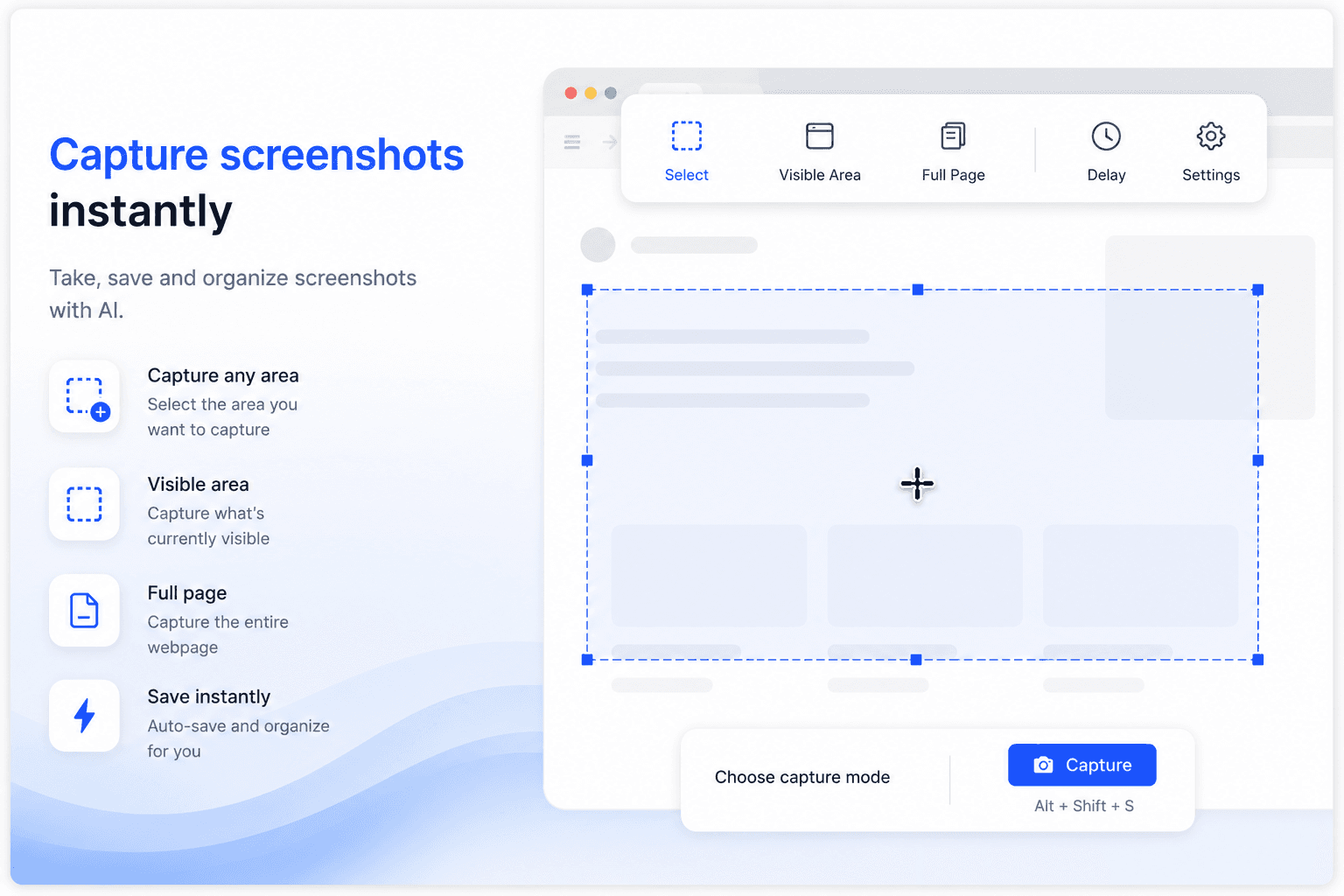
Capture papers and citations β€” right inside Chrome

Take, save, and organize screenshots of papers, citation pages, and conference abstracts with AI. Every screenshot you capture and every PDF you download gets named, sorted by topic, and synced automatically β€” without leaving the tab.

  • Capture any area, the visible area, or a full paper as PDF
  • Screenshots auto-saved, named, and filed by research topic
  • Downloads sorted into the right project folder automatically
  • Full-content search inside papers, datasets, and notes
  • Instant sync to Filex AI on iPhone, Android, and web
Filex AI browser extension capturing and organizing a screenshot

Smart Grouping & Lenses

Group your research, your way

Describe a group once β€” Filex AI keeps it live and up to date automatically.

β€œGroup all papers on transformer architecture”

β€œGroup datasets by project”

β€œCreate a Lens for this year's literature review sources”

β€œGroup lab notes by experiment”

β€œGroup all papers by a specific author”

β€œCreate a Lens for manuscripts in progress”

β€œGroup methodology docs by protocol type”

β€œCreate a Lens for grant-related documents”

Available Everywhere

AI File Organizer for Researchers β€” iPhone & Android

iPhone & iPad App

Scan documents, organize files, and search by content on the go. Available on iOS and iPadOS.

Get the app

Android App

Scan documents, organize files, and search by content on the go. Available on Android.

Get the app

Web App

Full-featured workspace in your browser. Organize, search, share, and manage files from anywhere.

Get started

Browser Extension

AI file management directly inside Google Drive, OneDrive, and Dropbox. No tab switching.

Add to Chrome

Simple, transparent pricing

Start free. Upgrade only when you need more power.

Free

Start organizing smarter with AI-powered file management.

$0
  • 10 files one time
  • AI content analysis & auto-sorting
  • Smart file renaming
  • Basic tagging
  • Cloud sync across devices
  • Export Organized Folders
Best Value

Premium (Yearly)

Save more with annual billing

$3.75/mo

Billed $44.99 once a year

  • 6000 files organization per year
  • Advanced subject-based folders
  • OCR for images & scans
  • Handwritten notes analysis
  • Mobile app access
  • Share-to-organize from anywhere
  • Priority support
  • Export Organized Folders
Most Popular

Premium

Ideal for professionals who organise files, notes, and projects every day.

$7.99/month
  • 500 files organization per month
  • Advanced subject-based folders
  • OCR for images & scans
  • Handwritten notes analysis
  • Mobile app access
  • Share-to-organize from anywhere
  • Priority support
  • Export Organized Folders

What People Are Saying

Join thousands who've revolutionized their file management

πŸ”΄Reddit
Finally organized 3 years of PhD papers. This saved me during dissertation writing. My research folder went from 500 files to perfectly organized topics.
P
via Reddit
🐦X
βœ“ Verified
Organized 5 years of research in under 15 minutes. Found papers I forgot I had. Worth every penny (it's free btw).
R
via X
πŸ”΄Reddit
All my papers are now sorted by topic. No more "nature_paper(47).pdf". Can actually find literature during manuscript writing.
G
via Reddit
🐦X
βœ“ Verified
Didn't expect AI to understand research papers this well. It reads abstracts and knows which project they belong to. Mind blown 🀯
L
via X
πŸ”΄Reddit
Found old datasets from my first year instantly. The search feature actually works. Saved my literature review chapter.
D
via Reddit
πŸ”΄Reddit
Game changer for remote research. All my downloaded papers and lab notes are organized automatically. No more panic before meetings.
R
via Reddit

Complete guide

The Complete Guide to AI File Management for Researchers

Why a Research Library Becomes Unmanageable Across a Multi-Year Project

A researcher early in a project can usually keep a few dozen papers organized through memory and a simple folder. That stops working once a research library grows across years of a PhD or multiple concurrent projects, with papers, datasets, and lab notes accumulating from journals, preprint servers, and personal experiments, each with its own naming habits or none at all. A file called "paper_final_FINAL_revised.pdf" tells nobody what topic or project it belongs to without opening it.

The real cost shows up while writing a manuscript or preparing for a committee meeting, exactly when time is tightest and finding the right citation or dataset matters most. A research directory built on the assumption that every download gets filed correctly the first time rarely survives contact with years of accumulated literature and data across a busy research program.

AI-based organization removes the dependency on remembering to file every paper correctly by hand. Because Filex AI reads the topic, methodology, and content directly from each file, the two-hundredth paper across your busiest literature review gets filed with the same accuracy as the first, regardless of how it was named when it was downloaded.

How AI Identifies the Topic and Project From Content Alone

A PDF named "download (3).pdf" could be a foundational paper, a dataset description, a methodology write-up, or a conference abstract, and a filename-based system has no way to tell them apart. Filex AI reads the actual text of the document, the abstract, the methodology described, the topic and field, to determine both what kind of document it is and which research area or project it belongs to.

This matters most during a literature review, when the same generic document types, papers, preprints, reviews, recur across every research area a scholar tracks. The only thing distinguishing a transformer architecture paper from an unrelated machine learning paper is the specific content buried in the abstract and methodology, not the filename. Content-based categorization reads that content the same way a researcher skimming an abstract would, then files the document under the correct topic automatically.

Because this does not depend on filenames or folder discipline, it works identically well on a paper downloaded from a journal with a system-generated filename and a scanned conference handout with no naming convention at all. The signal was always inside the document, never in how it happened to be named when it was saved.

Handling a Literature Review Backlog and Years of Research Data

A literature review is where manual filing fails most visibly. Dozens or hundreds of papers accumulate over the course of a project, each needing to be read, categorized, and cross-referenced, and sorting that volume by hand while also conducting research means filing gets deferred, often until a deadline forces a scramble to reconstruct what's actually been read and where it fits.

Filex AI processes a batch of papers or datasets the same way it processes any other upload: import them exactly as received, with no pre-sorting or renaming, and every document gets read, categorized, and filed under the correct research topic in a single pass. This applies equally to a backlog of older papers and datasets sitting in an archive with inconsistent organization, since each document is evaluated on its own content rather than when it was downloaded.

For a growing research program, this matters most when returning to a topic after time away or when a new lab member joins. A history of papers, datasets, and lab notes represents real accumulated knowledge, and none of it is realized if those files are effectively unsearchable when they're needed again months or years later.

  • Upload an entire literature review backlog or dataset archive in one pass, no pre-sorting needed
  • Every document is read for topic, methodology, and research area
  • Files are grouped by research topic automatically, even across a large library
  • Older, previously unsorted papers and data are processed with the same accuracy as new uploads

Preparing Manuscripts and Working Across the Lab and the Field

Manuscript preparation depends on quickly pulling together the right papers, datasets, and supporting figures from across a research history, often under a submission deadline. Search that reads actual content rather than requiring an exact filename means a query like "experiment results" or "dataset for the quantum computing trial" surfaces what's needed without a researcher needing to remember precisely how something was named months earlier.

Research also frequently happens across multiple locations, a desk for writing, a lab for experiments, the field for data collection, and a document system that only works well from one location doesn't fit how research actually gets done. Filex AI syncs organized files in real time across web, iPhone, and Android, so a lab note captured on a phone during an experiment is immediately searchable from a laptop while writing later that day.

Frequently asked questions

Everything you need to know about using Filex AI

Is Filex AI free for researchers?

Yes! Researchers and PhD students get free credits to organize 10 files. We offer a generous free tier specifically designed for academics, with premium plans available for unlimited organization.

Does it work with research PDFs and scanned papers?

Absolutely. Filex AI supports PDFs, scanned documents, images, and more. Our OCR technology can even read handwritten lab notes from phone photos.

Can it organize papers from different journals?

Yes! Upload papers from arXiv, PubMed, Nature, Science, or any source. The AI analyzes the content and categorizes them with your other research materials.

Is my research data private and secure?

Your privacy is our priority. All files are encrypted end-to-end, meaning only you can access your research materials. We never share or sell your data, and you can delete everything anytime.

Does it rename my original research files?

No, your original files remain completely untouched. Filex AI creates an organized view and smart copies with better names, but your original downloads stay exactly as they are.

Can I access my organized research on mobile?

Yes! Files sync automatically across all your devices. Access your organized papers on your phone, tablet, laptop, or any web browser. Perfect for reviewing on the go.

Does it work for all research fields?

Yes! Whether you're in STEM, social sciences, humanities, medicine, or any other field, our AI understands academic content across all disciplines and organizes accordingly.

Can I delete my research data permanently?

Absolutely. You have complete control over your data. Delete individual files, entire folders, or your whole account at any time with one click. All data is immediately and permanently erased.

Is any setup or configuration required?

No setup needed! Simply create an account, upload your files, and the AI starts organizing immediately. No manual rules, folders, or tagging required.

How accurate is the AI at categorizing research papers?

Our AI achieves 95%+ accuracy in categorizing academic files. It understands research topics, methodologies, fields, and context. You can always manually adjust if needed.

Ready to Organize Your Research?

Join thousands of researchers who have already transformed their chaotic research folders into organized knowledge bases.