AI File & Document Management

One Shared Library
Not Five Different Tools

Files scattered across Slack, email, and shared drives get read and organized automatically into one searchable library your whole team can actually use.

No credit card required Β· Free plan included

|
10+
hours saved monthly on manual filing
3 sec
to find any file with AI search
100%
of files organized automatically

File sprawl is killing your productivity
β€” and AI can't help without context.

Messy files mean missed deadlines, lost work, and frustrated teams.

2.5 hours

wasted daily searching & organizing files

File Chaos

60%

of work context is lost in scattered files

Lost Context

73%

of teams struggle with inconsistent file names

Naming Confusion

How It Works

Four simple steps to a perfectly organized file system

01

Upload Your Files

Drop files, folders, or entire workspaces β€” PDFs, images, docs, anything messy.

02

Tell AI What You Want

Use plain English like β€œorganize by project” or β€œgroup by client & date.”

03

AI Organizes Instantly

Files are renamed, categorized, and structured automatically β€” no rules needed.

04

Find Anything Fast

Search using natural language and access any file in seconds.

Everything you need to tame file chaos

Powerful features designed to save you hours every week

Key Feature
πŸ—‚οΈ

One Library, Regardless of Where a File Started

Files shared in Slack, sent over email, or dropped in a folder all land in the same organized, searchable library, so your team stops needing to remember which tool a document was originally shared in.

Key Feature
πŸ”„

Always Know the Current Version

Instead of "final_v4_ACTUAL.docx" floating around five different Slack threads, AI groups drafts and versions by project, helping surface which one is actually current.

πŸ’¬

Files Shared in a DM Don't Disappear

A file shared once in a direct message is easy to lose track of once the conversation scrolls away. Filex AI keeps it in the shared library, findable by anyone on the team who needs it later.

πŸ§‘β€πŸ’Ό

New Hires Find What They Need on Day One

Onboarding docs, team policies, and templates are organized and kept current, so a new team member can search and find the right document instead of pinging five people to ask.

πŸ”

Search Across Every Source at Once

Find any document by describing it in plain language, regardless of whether it came from Slack, email, or a shared drive. One search covers everywhere your team's files actually live.

🌍

Works the Same Across Time Zones

A distributed team doesn't need everyone online at once to find a file. Since organization happens automatically, a document uploaded by someone in one time zone is fully organized and searchable before a teammate elsewhere logs on.

Auto Organization

Drag in scattered files. Filex AI unifies them by project.

Drop in files from Slack, email, and shared drives, tell Filex AI how you want them grouped, and let AI understand, rename, and organize them instantly. It reads content β€” not just source β€” and follows your custom rule every time.

Understands file content, not just filenames
Learns your patterns over time
Smart renaming
Nested folder structures
Custom organization rules in plain English
Works with scanned documents
2.5 hrs
saved per day
50+
file formats
iOS & Android
mobile apps
Learn More

Custom organization rule

β€œGroup files by project, then by document type”
Project Alpha - FilesReports & DecksTeam Policies & Onboarding
  • πŸ“„project_brief_v4_slack.pdfProject Alpha - Files/Project_Brief_Version4_Latest.pdf
  • πŸ“„deck_final_from_slack_thread.pptxReports & Decks/Client_Deck_Presented_March2026.pptx
  • πŸ“„onboarding_doc_2025_old.docxTeam Policies & Onboarding/Onboarding_Guide_Current_Version.docx
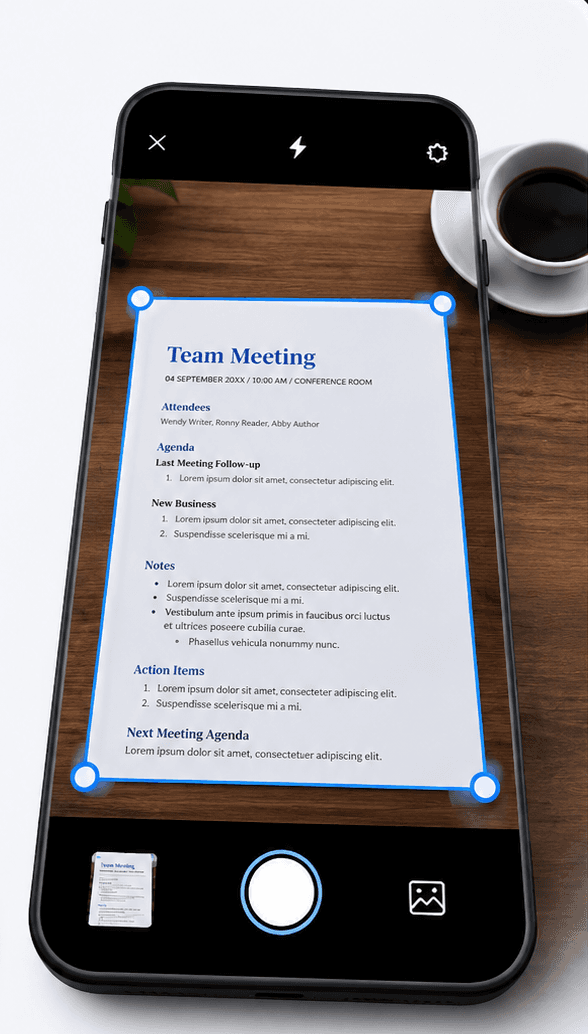
Filex AI document scanner scanning and organizing a document on mobile

Document Scanner

Scan it. Filex AI files it under the right project.

Point your camera at a printed proof or drop in a file shared over Slack. Filex AI reads it, names it clearly, and files it under the right project β€” no manual sorting across five different tools.

  1. 01

    Tap scan or drop in the file

    Open Filex AI, tap scan for a physical document, or drop in anything shared over Slack, email, or a drive. Then tap organize. That is the whole job.

  2. 02

    AI reads the document

    Content analysis extracts what the document actually is: the project, the document type, the status, the date.

  3. 03

    It files itself

    The file lands in the project folder that fits it β€” or Filex AI creates one. It gets a clear name built from its content, not "deck_final_from_slack_thread.pptx".

  4. 04

    Find it by asking

    Weeks later, just type "onboarding guide" or "Project Alpha spec doc". The file is already indexed, named, and linked β€” regardless of which tool it came from.

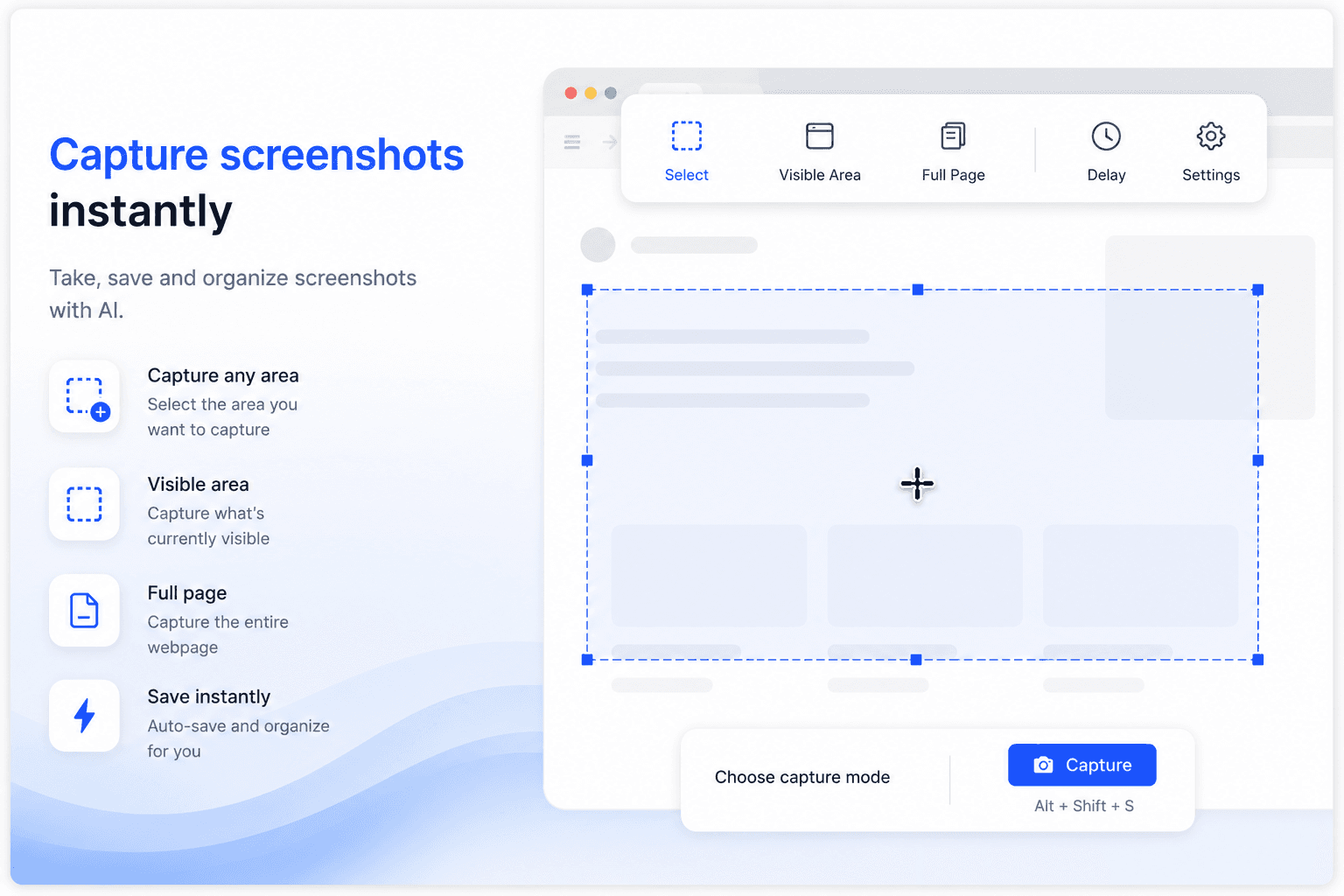
Browser Extension

Capture shared docs and dashboards β€” right inside Chrome

Take, save, and organize screenshots of Slack threads, shared docs, and project dashboards with AI. Every screenshot you capture and every file you download gets named, sorted by project, and synced automatically β€” without leaving the tab.

  • Capture any area, the visible area, or a full dashboard page
  • Screenshots auto-saved, named, and filed under the right project
  • Downloads sorted into the right project folder automatically
  • Full-content search inside briefs, decks, and policies
  • Instant sync to Filex AI on iPhone, Android, and web
Filex AI browser extension capturing and organizing a screenshot

Smart Grouping & Lenses

Group your projects, your way

Describe a group once β€” Filex AI keeps it live and up to date automatically.

β€œGroup all files for Project Alpha”

β€œGroup reports and decks by quarter”

β€œCreate a Lens for this quarter's client contracts”

β€œGroup onboarding material by team”

β€œGroup all files shared this week”

β€œCreate a Lens for the current version of every doc”

β€œGroup policy documents by department”

β€œCreate a Lens for files shared in DMs”

Available Everywhere

AI File Organizer for Remote Teams β€” iPhone & Android

iPhone & iPad App

Scan documents, organize files, and search by content on the go. Available on iOS and iPadOS.

Get the app

Android App

Scan documents, organize files, and search by content on the go. Available on Android.

Get the app

Web App

Full-featured workspace in your browser. Organize, search, share, and manage files from anywhere.

Get started

Browser Extension

AI file management directly inside Google Drive, OneDrive, and Dropbox. No tab switching.

Add to Chrome

Simple, transparent pricing

Start free. Upgrade only when you need more power.

Free

Start organizing smarter with AI-powered file management.

$0
  • 10 files one time
  • AI content analysis & auto-sorting
  • Smart file renaming
  • Basic tagging
  • Cloud sync across devices
  • Export Organized Folders
Best Value

Premium (Yearly)

Save more with annual billing

$3.75/mo

Billed $44.99 once a year

  • 6000 files organization per year
  • Advanced subject-based folders
  • OCR for images & scans
  • Handwritten notes analysis
  • Mobile app access
  • Share-to-organize from anywhere
  • Priority support
  • Export Organized Folders
Most Popular

Premium

Ideal for professionals who organise files, notes, and projects every day.

$7.99/month
  • 500 files organization per month
  • Advanced subject-based folders
  • OCR for images & scans
  • Handwritten notes analysis
  • Mobile app access
  • Share-to-organize from anywhere
  • Priority support
  • Export Organized Folders

What People Are Saying

Join thousands who've revolutionized their file management

πŸ”΄Reddit
Our team is fully remote across four time zones and "does anyone have the latest deck" was a daily Slack message. Now everything is organized automatically and that question basically stopped.
R
via Reddit
🐦X
βœ“ Verified
A file shared with me in a DM three months ago that I completely forgot about turned out to be exactly what a teammate needed. Found it in a search instead of scrolling through old messages.
D
via X
πŸ”΄Reddit
New hires used to spend their first week asking where things were. Now they search and find the onboarding doc themselves. Genuinely reduced the ramp-up time.
P
via Reddit
🐦X
βœ“ Verified
Our files were spread across Slack, Gmail, and a Drive folder nobody kept updated. Having one search that actually covers everywhere was the fix we needed.
S
via X
πŸ”΄Reddit
I work asynchronously across a big time difference from most of the team. Files I upload are organized before anyone else even logs on. No filing bottleneck waiting on me.
A
via Reddit
πŸ”΄Reddit
The AI actually figured out which project a random spec doc belonged to even though it was shared in an unrelated Slack channel by mistake. Small thing but it kept us from losing it.
R
via Reddit

Complete guide

The Complete Guide to AI File Management for Remote Teams

Why Manual Filing Breaks Down When Files Live in Five Different Tools

A co-located team can sometimes get away with a loose filing system because people talk, walk over to a desk, and settle version confusion in person. A distributed team doesn't have that fallback. Files get shared in Slack threads, sent as email attachments, dropped in a shared drive, or DMed directly, and each of those channels has its own history that's hard to search and easy to lose track of once a conversation scrolls past.

The real cost shows up as a constant, low-grade tax on the team: "does anyone have the latest version of this?" becomes a recurring Slack message, and a file shared once in a direct message effectively disappears for everyone except the original recipient. A shared drive built on the assumption that people will consistently upload and organize what they share elsewhere rarely survives contact with a team actually working across multiple tools simultaneously.

AI-based organization removes the dependency on any single tool or any single person remembering to file something correctly. Because Filex AI reads and organizes content regardless of which channel it arrived through, a file shared in a DM by someone in one time zone is just as organized and findable as one uploaded directly to a shared drive by someone else entirely.

How AI Identifies the Project and Document Type Regardless of Source

A file named "project_brief_v4_slack.pdf" tells you where it came from but not necessarily which project it's current for, especially once several similarly-named versions have circulated across different channels. Filex AI reads the actual content, the project name, the document type, the context, to determine what the document is and which project it belongs to, independent of which tool it was shared through.

This matters because the same generic document types, briefs, decks, specs, recur across every project a distributed team runs, often shared through multiple different channels by different team members. The only reliable signal distinguishing one project's brief from another's is the content itself, not the Slack channel or email thread it happened to arrive in. Content-based categorization reads that content the same way a project lead reviewing the shared drive would, then files it under the correct project automatically.

Because this does not depend on the source tool, it works identically well on a file exported directly from a shared drive with a clean filename and a screenshot dragged out of a Slack DM with a name like "deck_final_from_slack_thread.pptx". The signal was always inside the content, never in which app happened to be used to share it.

Unifying Years of Files Scattered Across Multiple Tools

A team that has operated for a while across Slack, email, and a shared drive accumulates a genuinely fragmented archive, the same project might have files in all three places, with no single source of truth for what's current. Manually consolidating that into one organized system is a project most teams never get around to, since it requires stopping regular work to do a large one-time cleanup.

Filex AI processes files from multiple sources the same way it processes a single upload: import them as they exist, with no pre-sorting required, and every file gets read, categorized, and filed by project in a single pass, regardless of which tool it originated in. This means a backlog exported from Slack alongside a folder of old email attachments can be unified into one searchable library without a dedicated migration effort.

For a growing distributed team, this matters most during onboarding and during project retrospectives. A single, organized archive representing the team's actual history is far more useful than five partial ones scattered across different tools, and none of that value is realized until the fragments are actually brought together.

  • Upload files from Slack exports, email, and shared drives in one pass
  • Every file is read for project name and document type, regardless of source
  • Files are unified into one searchable library, no manual consolidation needed
  • Version confusion is reduced by grouping drafts of the same document together

Keeping Organization Consistent Across Time Zones

A distributed team working across several time zones can't rely on a specific person being online to organize a file correctly, since the person who uploads something in one time zone might be asleep by the time a teammate elsewhere needs to find it. A filing system that depends on manual effort from any particular person becomes a bottleneck the moment that person is offline.

Filex AI removes that bottleneck by organizing files automatically the instant they're uploaded, with no manual filing step required from anyone. A document uploaded by someone finishing their day in one time zone is fully organized and searchable before a teammate starting their day elsewhere ever logs on, which means async-first collaboration doesn't depend on synchronous handoffs just to keep the team's shared files usable.

Frequently asked questions

Everything you need to know about using Filex AI

Can it unify files from Slack, email, and shared drives?

Yes. Files uploaded from any source are read and organized into one library automatically, so your team searches in one place instead of checking multiple tools.

Does it help figure out which version of a document is current?

Yes. Drafts and versions of the same project are grouped together with version context, which helps reduce confusion about which file is the current one to use.

Can teammates find a file that was only shared in a direct message?

Yes. Files added to the shared library stay findable by the whole team, not just whoever originally received them in a DM or private thread.

Does it help new hires find onboarding material?

Yes. Onboarding docs and team policies are organized and kept current, so new team members can search and find what they need without asking a teammate directly.

Does it work across different time zones for a distributed team?

Yes. Organization happens automatically regardless of who uploads a file or when, so nothing depends on a specific person being online to file something correctly.

Is our team's data private and secure?

Yes. All files are encrypted end-to-end. Nothing is shared or sold outside your organization, and files can be permanently deleted at any time.

Is it free to try for a team?

Yes, every account starts on the free Spark plan with credits to organize and sync files, no credit card required. Upload a current mix of shared documents to see what comes back organized.

Do we need to set up folders or a filing system first?

No. The AI determines categories based on document content automatically, so there's no manual folder structure to design or agree on as a team.

Can everyone on the team access the same organized library?

Yes. Files sync across the team, so a document uploaded by one teammate is organized and searchable by everyone else immediately, regardless of device or location.

Does it work for teams already using other tools like Slack or Notion?

Yes. Filex AI is designed to unify files that already live across multiple tools, rather than requiring your team to abandon what it currently uses.

Ready to Give Your Team One Shared Library?

Join distributed teams who've turned files scattered across five tools into one organized, searchable system everyone can use.