
How to Find Legal Documents Quickly Using AI in 2026
Learn how to find legal documents quickly using AI. Discover how Filex AI's semantic search helps lawyers and paralegals locate contracts and evidence instantly.
Filex AI reads every contract, pleading, court order, and piece of correspondence, then files it by case and client, renames it clearly, and makes it searchable in plain English. No folders to create. No manual sorting.
No credit card required ยท Free plan included
Watch a real legal workflow. Messy contracts, pleadings, and court documents get organized by case in seconds.
The Problem
Every case adds contracts, pleadings, discovery documents, hearing notices, and correspondence. Manual folders cannot keep up.
Filings in court portals, contracts in email, scans on your desktop. Nothing lives in one place, and nothing is named consistently.
Finding one exhibit or deposition means digging through folders named "scan_final_v3.pdf" while deadlines close in.
Hearing notices, filing deadlines, and limitation periods hide inside documents nobody re-reads until it is too late.
Thousands of discovery documents arrive with inconsistent names and no structure, and every one of them might matter.
How it works
From chaos to an organized practice in minutes.
Drag in contracts, pleadings, court orders, and scans from desktop, phone, or email. Any format, any filename.
Filex AI extracts parties, case numbers, clauses, and dates, then groups everything by matter and renames files consistently.
Search in plain English across every case on web, iPhone, or Android. Every device stays in sync.
Features
Built for attorneys, paralegals, and legal teams handling documents at case scale.
Filex AI detects case names, numbers, and parties inside each document and files pleadings, contracts, and orders under the right matter automatically.
Create collections in natural language, like "everything for Smith v. Jones" or "all ABC Corp agreements". One contract can live in a case lens and a client lens at the same time without duplication.
Ask "find the signed NDA with ABC Corporation" and get the exact file in seconds. Search by party, case, clause, or date.
Turns "scan_093012.pdf" into "2026_Smith-v-Jones_Motion.pdf" using parties, dates, and document type extracted from the content.
Party names, case numbers, amounts, clauses, and deadlines are pulled out of every document and turned into structured, searchable data.
Hearing dates, filing deadlines, and contract expiries are detected inside your documents so you get reminded before they slip.
Scanned agreements, photographed exhibits, and discovery PDFs become fully searchable text documents.
PDFs, images, screenshots, Word, Excel, and CSV files are all indexed. One search covers your entire practice.
Scan signed agreements and filings the moment the ink dries โ each scan is filed under the right matter automatically.
Client files are encrypted in transit and at rest, never used to train public AI models. Available on Android, iPhone, iPad, and the web.
The Filex AI document scanner reads, names, and files whatever you point your camera at โ with the same Law Firms & Legal organization applied automatically.
Before and after
Filex AI reads document content, like party names, case numbers, dates, and clauses, and builds the structure for you.
Before
After: organized by Filex AI
โ๏ธ Smith v. Jones
๐ ABC Corp Contracts
From agreement_final_FINAL_v3.pdf. No manual data entry, ever.
๐ค Client
John Smith
โ๏ธ Case
Smith v. Jones, 2026-CV-118
๐ข Opposing Party
Jones Holdings Ltd
๐ Hearing Date
14 Aug 2026
โ๏ธ Signed
Yes, all parties
Auto Organization
Drop in agreements, court documents, and discovery files, tell Filex AI how you want them grouped, and let AI understand, rename, and organize them instantly. It reads content โ not just filenames โ and follows your custom rule every time.
Custom organization rule

Document Scanner
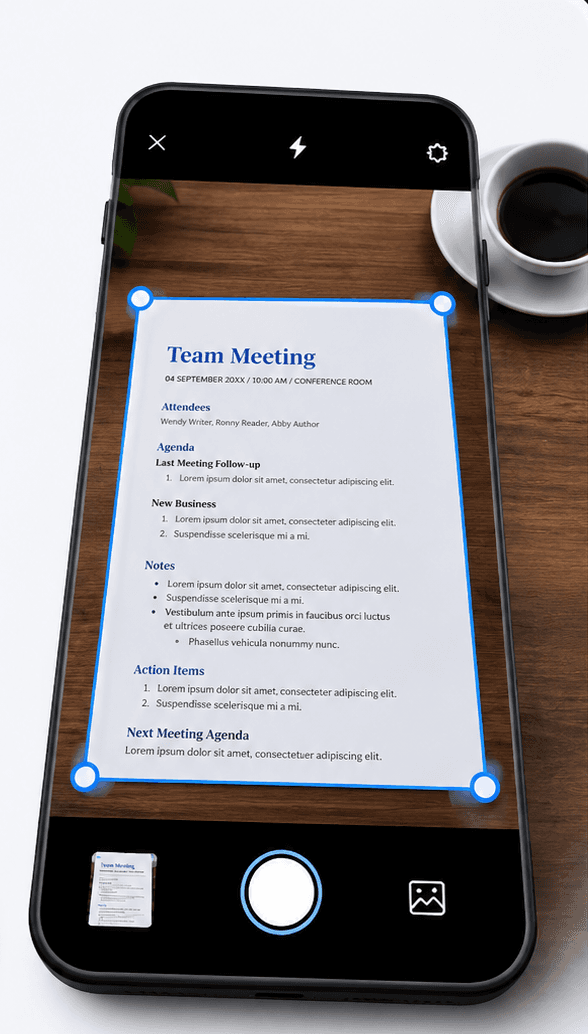
Point your camera at a signed agreement, a court filing, or a client document. Filex AI reads it, names it clearly, and files it under the right matter โ no manual sorting.
Tap scan and point your camera
Open Filex AI, tap scan, and point your camera at any agreement, filing, or notice. Then tap organize. That is the whole job.
AI reads the document
OCR and content analysis extract what the document actually is: the matter, the parties, the dates, the clauses.
It files itself
The scan lands in the matter folder that fits it โ or Filex AI creates one. It gets a clear name built from its content, not "scan_20260114.pdf".
Find it by asking
Weeks later, just type "find depositions for Smith v. Jones" or "show ABC Corp agreements from Q1". The scan is already indexed, named, and linked.
Browser Extension
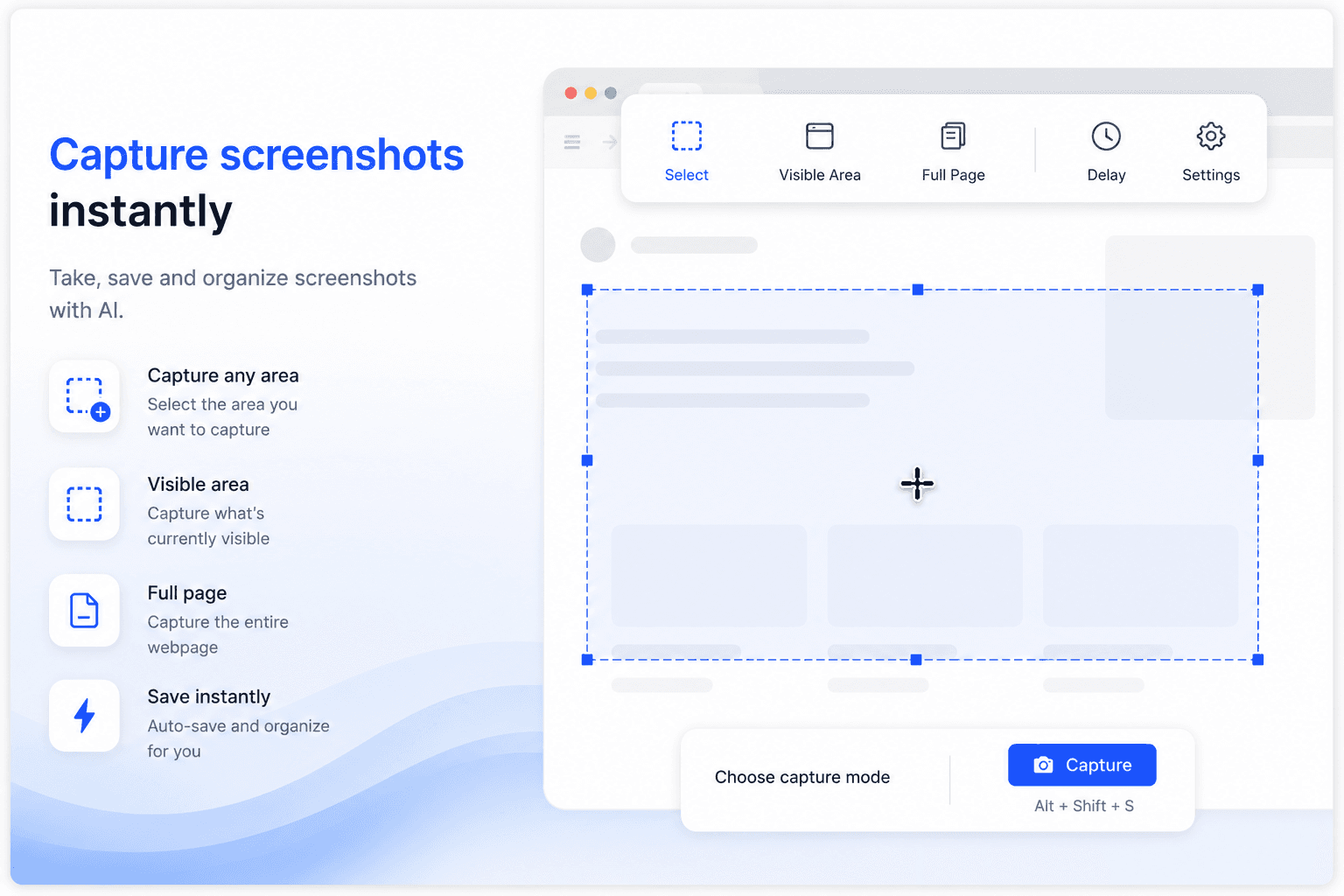
Take, save, and organize screenshots of e-filings, docket entries, and evidence with AI. Every screenshot you capture and every file you download gets named, sorted by matter, and synced automatically โ without leaving the tab.

Use cases
โFind the signed NDA with ABC Corporationโ
โShow all documents for Smith v. Jonesโ
โWhich contracts have non-compete clauses?โ
โFind the hearing notice from March 2026โ
โShow all court orders for case 2026-CV-118โ
โFind the retainer agreement for John Smithโ
โWhich agreements expire in the next 90 days?โ
โShow correspondence with opposing counselโ
Smart Grouping & Lenses
Describe a group once โ Filex AI keeps it live and up to date automatically.
โGroup all documents for Smith v. Jonesโ
โGroup agreements by counterpartyโ
โCreate a Lens for the appeal docketโ
โGroup discovery documents by matterโ
โGroup all filings due this weekโ
โCreate a Lens for ABC Corp agreementsโ
โGroup depositions by caseโ
โCreate a Lens for signed contractsโ
Available Everywhere
Scan documents, organize files, and search by content on the go. Available on iOS and iPadOS.
Get the appScan documents, organize files, and search by content on the go. Available on Android.
Get the appFull-featured workspace in your browser. Organize, search, share, and manage files from anywhere.
Get startedAI file management directly inside Google Drive, OneDrive, and Dropbox. No tab switching.
Add to ChromeComparison
Everything you do by hand today, Filex AI does automatically the moment a file arrives.
Capability
Filex AI
Manual folders
Auto-organize by case
Files sorted by case name, number, and document type the moment they arrive
Content-based renaming
Clear names built from parties, dates, and document type found inside the file
OCR for scans and discovery
Scanned agreements and photographed exhibits become searchable text
Natural language search
Type "find the signed NDA with ABC Corporation" and get the exact file
AI Lenses collections
One document can live in many collections at once, with no duplication
Deadline extraction
Hearing dates and filing deadlines pulled from documents automatically
Cross-device sync
Web, iPhone, and Android stay in sync in real time
Encrypted and private
Files encrypted in transit and at rest, never used to train public models
Start free. Upgrade only when you need more power.
Start organizing smarter with AI-powered file management.
Ideal for professionals who organise files, notes, and projects every day.
Your files are protected using modern security and privacy best practices
All files and related metadata are encrypted both in transit and at rest using industry-standard encryption methods.
Designed in line with GDPR principles including data minimisation, purpose limitation, and user-controlled access.
Files are processed only during the organisation workflow. Once organisation is completed, files are no longer accessed or processed.
Only you can access your files. We do not sell user data, and files are never used for model training or secondary purposes.
Data is stored on hardened cloud infrastructure with strict access controls, auditing, and continuous monitoring.
Security controls follow least-privilege access, secure key management, and proactive risk mitigation practices.
Guides & resources
Deep dives on organizing case files, court documents, and legal records with AI.

Learn how to find legal documents quickly using AI. Discover how Filex AI's semantic search helps lawyers and paralegals locate contracts and evidence instantly.

Learn how to organize court documents digitally using AI. Discover how Filex AI helps litigators and paralegals manage pleadings, discovery, and case files.

Learn how to organize hearing notices and court orders digitally using AI. Discover how Filex AI helps lawyers track deadlines and avoid court sanctions in 2026.

Discover the best way to organize legal case files using AI. Learn how Filex AI helps law firms manage discovery, pleadings, and evidence effortlessly in 2026.

Learn how lawyers can organize case files more efficiently using AI. Discover how Filex AI helps law firms reclaim billable hours and manage discovery in 2026.

Learn how to organize legal documents digitally using AI. Discover how Filex AI helps law firms and professionals manage contracts, briefs, and case files in 2026.
Join thousands who've revolutionized their file management
Iโm a property agent and deal with floor plans, contracts, and client documents every day. This made my files much easier to manage without manual sorting.
As a property agent, Iโm constantly downloading agreements and brochures. Finding things quickly before client calls is way less stressful now.
Iโm a software developer and my Downloads folder was chaosโscreenshots, logs, random PDFs. This organised everything better than I expected.
I work in marketing and download a lot of decks and reports. This saved me during meetings when I needed files fast.
Iโm a college student and my notes and PDFs were always scattered. This helped me clean things up without thinking too much.
I was a bit worried about privacy at first, but it feels safe. I mostly use it for work documents and research files.
Complete guide
A solo attorney with a dozen active matters can usually keep the filing straight through memory and discipline alone. The moment a practice grows past that point, whether through more attorneys, more matters, or a busier litigation calendar, manual filing stops scaling. Pleadings arrive from court portals, contracts arrive by email, discovery documents arrive by the thousand from opposing counsel, and every one of those sources has its own naming convention or, more often, no convention at all. A file called "agreement_final_FINAL_v3.pdf" tells a paralegal nothing about which matter it belongs to without opening it.
The real cost shows up during trial prep or when a deadline is closing in, exactly the moments when time is most expensive. Finding one exhibit or deposition transcript means digging through a shared drive built on the assumption that whoever filed each document did so correctly and consistently, an assumption that rarely survives contact with a busy litigation calendar. Every exception, every document filed "for now" into a general folder, compounds the problem for the next person who needs to find it.
AI-based organization sidesteps this by removing the dependency on a person correctly filing every document by hand. Because Filex AI reads party names, case numbers, and document type directly from the content of each file, the thousandth pleading across your busiest matter gets categorized with the same accuracy as the first, regardless of who uploaded it or how it was named when it arrived.
A PDF named "court_doc (2).pdf" could be a motion, a hearing notice, an exhibit, or a piece of correspondence, and a filename or file-type based system has no way to distinguish between them. Filex AI reads the actual text of the document, the caption, the case number, the parties named in the first paragraph, and the substance of what the filing actually says, to determine both what kind of document it is and which matter it belongs to.
This is particularly valuable in litigation, where the same generic document types, motions, orders, notices, correspondence, recur across every single matter a firm handles. The only thing distinguishing a motion in Smith v. Jones from a motion in an unrelated case is the case caption and party names buried in the text, not the filename. Content-based categorization reads that caption the same way a paralegal would, then uses it to file the document under the correct matter automatically.
Because the categorization does not depend on filenames or folder discipline, it works identically well on a court filing named according to a portal's auto-generated convention and a scanned exhibit that a client emailed with no filename convention at all. The signal was always inside the document, never in how it happened to be named when it arrived.
Discovery is where manual organization fails most visibly. A single production can contain thousands of pages arriving with sequential, meaningless names, and every one of them might matter to the case. Sorting that volume by hand, or even by a paralegal working methodically, takes hours that could be spent on substantive case work, and there is no guarantee the manual sort will be complete or consistent.
Filex AI processes a discovery production the same way it processes any other batch: upload it exactly as received, with no pre-sorting or renaming, and every document gets read, categorized, and filed under the correct matter in a single pass. This applies equally to a firm's backlog of older, closed matters sitting in an archive with inconsistent or missing organization. Whether the files are ten days old or ten years old, each one is evaluated on its own content, not its position in a queue or the convention it happened to be named under.
For a growing practice, this matters beyond any single case. A firm's historical files represent real institutional knowledge, prior positions taken, prior settlement terms, prior client relationships, and none of that value is realized if the files are effectively unsearchable. Bringing a backlog into a searchable, categorized state turns a liability into a usable resource.
Legal documents carry a different weight than most other file types: privilege, confidentiality obligations, and often sensitive personal or financial information about clients and opposing parties alike. Trusting any tool with an entire case file, contracts, correspondence, financial exhibits, is a meaningfully bigger decision than uploading a single document, and attorneys are right to be cautious about where that trust is placed.
Filex AI encrypts every file in transit and at rest, keeps documents private to the account or firm workspace they were uploaded to, and never sells, shares, or uses uploaded content to train public AI models. Organizing a case file creates a structured, searchable copy of your documents; it does not modify or expose your originals, and nothing about the categorization process requires the content to leave your control in any way beyond secure processing and storage.
This is also why Filex AI is positioned as a complement to practice management and case management software rather than a replacement for it. It handles document organization, OCR, and natural language search specifically, while the systems of record your firm already relies on for docketing, billing, and conflict checks continue operating exactly as they do today.
Everything you need to know about using Filex AI
AI file and document management for law firms uses artificial intelligence to read the content of your legal documents, such as contracts, pleadings, court orders, and correspondence, and automatically organize them by case and client, rename them consistently, and make them searchable in natural language. Instead of manually creating folders per matter, the AI builds and maintains the structure for you.
Filex AI reads each document using OCR and AI content analysis, extracts key details like party names, case numbers, dates, and document type, then groups files by matter. Files are renamed with a clear pattern like 2026_Smith-v-Jones_Motion.pdf so they stay identifiable everywhere.
Yes. All files are encrypted in transit and at rest on secure cloud infrastructure. Your documents are private to your account, are never sold or shared, and are never used to train public AI models.
Yes. Filex AI supports natural language search, so you can type queries like "find all NDAs with ABC Corporation" or "which contracts have non-compete clauses". Because the AI indexes document content, not just filenames, it finds the right file even if it was originally named scan_20260114.pdf.
Absolutely. Filex AI has a free Spark plan that is ideal for solo attorneys with a smaller caseload. As your practice grows, the same AI structure scales with you without changing your workflow.
Yes. Filex AI uses OCR to read scanned PDFs, photographed exhibits, and image files, so thousands of discovery pages become fully searchable text you can query in plain English.
Yes. Filex AI extracts hearing dates, filing deadlines, and contract expiries from your documents automatically, so you can see upcoming dates across all matters instead of discovering them too late.
No. Filex AI handles document organization, search, and AI analysis. It complements case management tools by making document access instant and search powerful, while your practice management stays where it is.
AI Lenses let you group documents using natural language instead of folders. You can create collections like "everything for Smith v. Jones", "all ABC Corp agreements", or "documents for the appeal", and a single file can appear in multiple lenses at once without duplication.
Yes. Upload an entire discovery production in one batch, and Filex AI reads and categorizes every page individually, regardless of how inconsistently the files were named when they were produced or received.
Filex AI extracts party names, including opposing parties, from every document it processes, so you can search or filter by any party across your entire file library. It is not a substitute for a formal conflict-check system, but it makes past involvement with a name far easier to surface.
Yes. Organized files and Lenses are tied to your account and can be part of a shared workspace, so a case team can search and retrieve the same organized library instead of maintaining separate personal copies of the same documents.
Join attorneys and legal teams who let AI handle the filing. Free to start, no credit card required.