
How to Organize Employee Documents Digitally in 2026 (Using AI)
Learn how to organize employee documents digitally in 2026. Discover how AI transforms HR file management, automates compliance, and secures personnel records.
Filex AI reads every resume, offer letter, contract, and payroll document, then files it by employee, renames it clearly, and makes it searchable in plain English. No folders to create. No manual sorting.
No credit card required ยท Free plan included
Watch a real HR workflow. Messy resumes, offer letters, and records get organized by employee in seconds.
The Problem
Every employee adds resumes, contracts, reviews, and payroll documents. Manual folders cannot keep up as your headcount grows.
Resumes in email, contracts on a shared drive, scans on someone's desktop. Nothing lives in one place, and nothing is named consistently.
Finding one employee's complete file means digging through folders named "final_v2_signed.pdf" right when compliance asks.
Contract end dates, probation reviews, and visa expiries hide inside documents nobody re-reads until it is too late.
Every new hire generates a stack of documents, and keeping each person's file complete and organized by hand does not scale.
How it works
From chaos to an organized workforce in minutes.
Drag in resumes, offer letters, contracts, and scans from desktop, phone, or email. Any format, any filename.
Filex AI extracts employee names, roles, dates, and terms, then groups everything by employee and renames files consistently.
Search in plain English across your entire workforce on web, iPhone, or Android. Every device stays in sync.
Features
Built for HR teams handling recruitment, onboarding, and employee records at company scale.
Filex AI detects the employee name inside each document and files resumes, contracts, and reviews under the right person automatically.
Create collections in natural language, like "everything for the design team hiring" or "all Q2 onboarding". One document can live in an employee lens and a hiring lens at the same time without duplication.
Ask "find John Smith's offer letter" and get the exact file in seconds. Search by employee, role, date, or document type.
Turns "scan_093012.pdf" into "2026_John-Smith_Offer-Letter.pdf" using employee names, dates, and document type extracted from the content.
Employee names, roles, salaries, start dates, and contract terms are pulled out of every document and turned into structured, searchable data.
Contract renewals, probation reviews, and visa expiries are detected inside your documents so you get reminded before they slip.
Scanned contracts, photographed IDs, and signed offer letters become fully searchable text documents.
PDFs, images, screenshots, Word, Excel, and CSV files are all indexed. One search covers your entire workforce.
Scan signed offer letters and IDs during onboarding โ each scan files itself under the right employee.
Employee data is encrypted in transit and at rest, never used to train public AI models. Available on Android, iPhone, iPad, and the web.
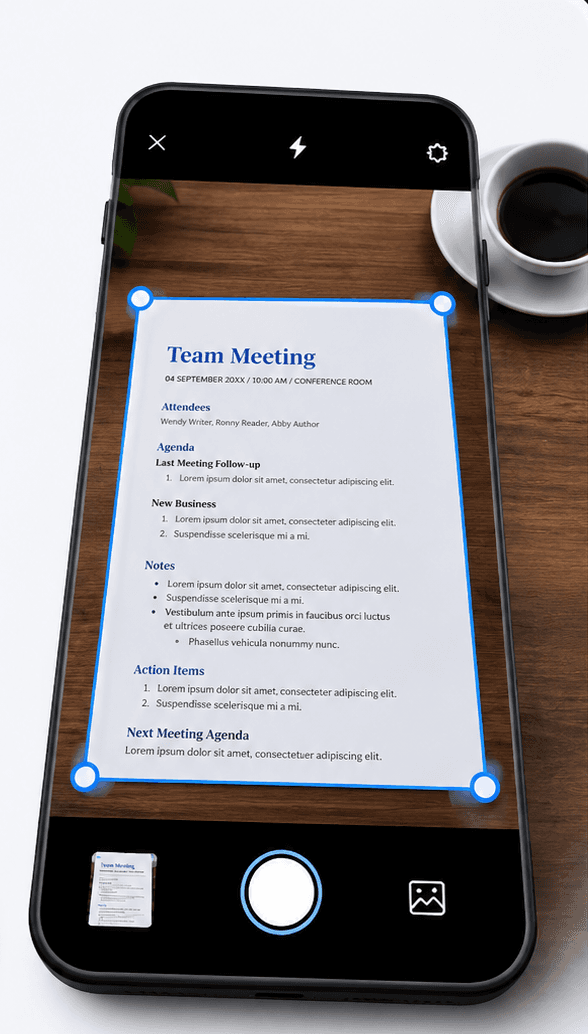
The Filex AI document scanner reads, names, and files whatever you point your camera at โ with the same HR Teams organization applied automatically.
Before and after
Filex AI reads document content, like employee names, roles, dates, and terms, and builds the structure for you.
Before
After: organized by Filex AI
๐งโ๐ผ John Smith
๐ Design Team Hiring
From offer_letter_FINAL_v3.pdf. No manual data entry, ever.
๐งโ๐ผ Employee
John Smith
๐ผ Role
Senior Designer
๐ Start Date
1 Feb 2026
๐ฐ Salary
$78,000 / year
โ๏ธ Signed
Yes, all parties
Auto Organization
Drop in resumes, offer letters, and signed contracts, tell Filex AI how you want them grouped, and let AI understand, rename, and organize them instantly. It reads content โ not just filenames โ and follows your custom rule every time.
Custom organization rule

Document Scanner
Point your camera at a signed offer letter, a resume, or a contract. Filex AI reads it, names it clearly, and files it under the right employee โ no manual sorting.
Tap scan and point your camera
Open Filex AI, tap scan, and point your camera at any offer letter, resume, or contract. Then tap organize. That is the whole job.
AI reads the document
OCR and content analysis extract what the document actually is: the employee, the role, the dates, the terms.
It files itself
The scan lands in the employee folder that fits it โ or Filex AI creates one. It gets a clear name built from its content, not "scan_20260114.pdf".
Find it by asking
Weeks later, just type "find Jane Doe's offer letter" or "show all Q2 onboarding documents". The scan is already indexed, named, and linked.
Browser Extension
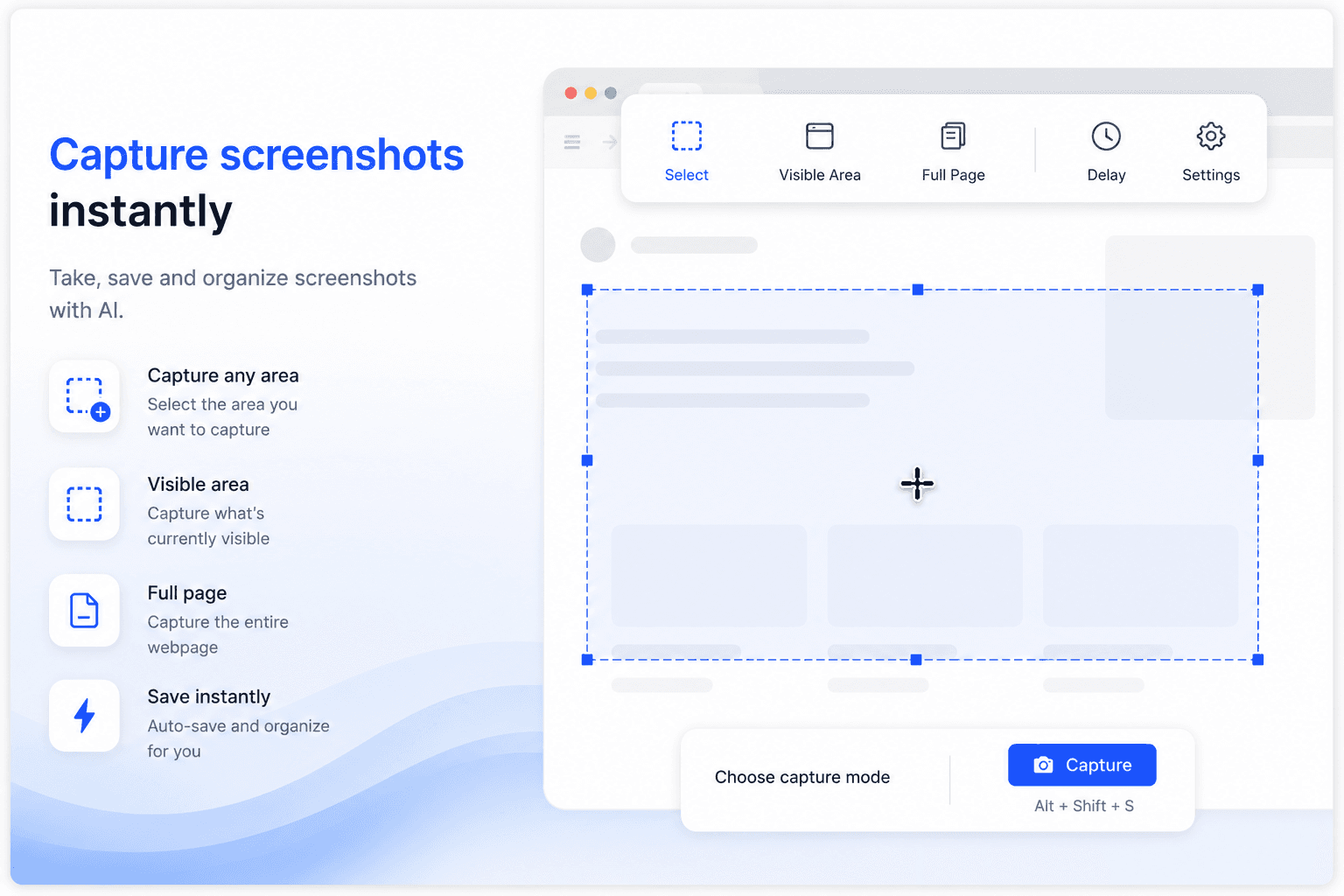
Take, save, and organize screenshots of applicant profiles, e-signature confirmations, and job postings with AI. Every screenshot you capture and every file you download gets named, sorted by employee, and synced automatically โ without leaving the tab.

Use cases
โFind John Smith's offer letterโ
โShow all resumes for the design roleโ
โWhich contracts are up for renewal this quarter?โ
โFind Sarah's performance review from 2026โ
โShow all onboarding documents for new hiresโ
โFind the signed NDA for Mark's contractโ
โWhich employees are missing tax forms?โ
โShow payroll records for March 2026โ
Smart Grouping & Lenses
Describe a group once โ Filex AI keeps it live and up to date automatically.
โGroup all documents for Jane Doeโ
โGroup resumes by role applied forโ
โCreate a Lens for Q2 onboardingโ
โGroup contracts by employee statusโ
โGroup all offer letters this quarterโ
โCreate a Lens for contractor agreementsโ
โGroup performance reviews by departmentโ
โCreate a Lens for expiring contractsโ
Available Everywhere
Scan documents, organize files, and search by content on the go. Available on iOS and iPadOS.
Get the appScan documents, organize files, and search by content on the go. Available on Android.
Get the appFull-featured workspace in your browser. Organize, search, share, and manage files from anywhere.
Get startedAI file management directly inside Google Drive, OneDrive, and Dropbox. No tab switching.
Add to ChromeComparison
Everything you do by hand today, Filex AI does automatically the moment a file arrives.
Capability
Filex AI
Manual folders
Auto-organize by employee
Files sorted by employee name and document type the moment they arrive
Content-based renaming
Clear names built from employee, date, and document type found inside the file
OCR for scans and signed docs
Scanned contracts and photographed IDs become searchable text
Natural language search
Type "find John Smith's offer letter" and get the exact file
AI Lenses collections
One document can live in many collections at once, with no duplication
Renewal reminders
Contract and probation dates pulled from documents automatically
Cross-device sync
Web, iPhone, and Android stay in sync in real time
Encrypted and private
Files encrypted in transit and at rest, never used to train public models
Start free. Upgrade only when you need more power.
Start organizing smarter with AI-powered file management.
Ideal for professionals who organise files, notes, and projects every day.
Your files are protected using modern security and privacy best practices
All files and related metadata are encrypted both in transit and at rest using industry-standard encryption methods.
Designed in line with GDPR principles including data minimisation, purpose limitation, and user-controlled access.
Files are processed only during the organisation workflow. Once organisation is completed, files are no longer accessed or processed.
Only you can access your files. We do not sell user data, and files are never used for model training or secondary purposes.
Data is stored on hardened cloud infrastructure with strict access controls, auditing, and continuous monitoring.
Security controls follow least-privilege access, secure key management, and proactive risk mitigation practices.
Guides & resources
Deep dives on organizing resumes, employee records, and onboarding documents with AI.

Learn how to organize employee documents digitally in 2026. Discover how AI transforms HR file management, automates compliance, and secures personnel records.

Discover the best document organizer for HR professionals in 2026. Learn how AI automates personnel files, streamlines compliance, and secures employee records.

Learn how to organize resumes and candidate documents digitally in 2026. Discover how AI transforms recruiting file management and automates candidate tracking.
Join thousands who've revolutionized their file management
Iโm a property agent and deal with floor plans, contracts, and client documents every day. This made my files much easier to manage without manual sorting.
As a property agent, Iโm constantly downloading agreements and brochures. Finding things quickly before client calls is way less stressful now.
Iโm a software developer and my Downloads folder was chaosโscreenshots, logs, random PDFs. This organised everything better than I expected.
I work in marketing and download a lot of decks and reports. This saved me during meetings when I needed files fast.
Iโm a college student and my notes and PDFs were always scattered. This helped me clean things up without thinking too much.
I was a bit worried about privacy at first, but it feels safe. I mostly use it for work documents and research files.
Complete guide
A shared drive with one folder per employee works reasonably well when a company has a few dozen people and one person handling HR. It starts to break down the moment hiring accelerates, multiple people touch the same files, and documents start arriving from different sources at once, resumes through an applicant tracking tool, signed offer letters through an e-signature platform, contracts through email, ID scans photographed during in-person onboarding. Every source has a different naming habit, and keeping a consistent folder structure across all of them depends entirely on someone applying the same discipline every single time.
The gap shows up most painfully during an audit or compliance request, exactly when speed matters most. Pulling a complete file for one employee, offer letter, signed contract, reviews, tax forms, means searching a shared drive built on the assumption that everyone filed correctly and consistently, an assumption that rarely holds once several people are contributing to the same folder structure over months or years. Contract renewal dates and probation review dates buried inside documents nobody re-opens compound the same problem in a different way.
Filex AI removes the dependency on consistent manual filing by reading the employee name and document type directly from each file's content. The five-hundredth offer letter in a growing company's hiring history gets categorized with the same accuracy as the first, because the categorization never depended on a person choosing the right folder in the first place.
A file named "offer_letter_FINAL_v3.pdf" or "resume (2).pdf" carries no information about which candidate or employee it belongs to, and a filename-based system has no way to resolve that ambiguity. Filex AI reads the actual text, the candidate or employee name, the role, the compensation terms, the dates, to determine both the document type and the specific person it should be filed under.
This distinction is what makes bulk hiring workflows manageable. A hiring pipeline for a single open role can generate dozens or hundreds of resumes that all look structurally identical from the outside, PDFs with generic filenames, and the only thing separating one candidate's file from another is the name and details printed inside it. Reading that content is what allows each resume, cover letter, and interview note to end up filed under the correct candidate automatically, rather than lumped together in one undifferentiated batch.
The same extraction powers natural language search across your workforce, so a query like "find John Smith's offer letter" or "show all resumes for the design role" returns the exact match, because the underlying search index is built from what each document actually says, not from filenames someone had to get right.
Most HR functions inherit some amount of legacy disorganization, whether from a prior HR system migration, a period of rapid hiring without dedicated HR support, or simply years of documents accumulating across different tools before anyone standardized a process. Old contracts, superseded offer letters, and historical performance reviews often sit in a state where nobody is confident they are complete or correctly filed, which becomes a real liability the moment a legal question or audit touches an older employment relationship.
Filex AI processes that backlog exactly as it exists, with no need to pre-sort or rename files first. Upload the entire archive, mixed employees, mixed document types, mixed years, and every file gets read, matched to the correct person, and renamed in a single pass. The size of the backlog does not change how the process works, because each document is evaluated individually based on its content rather than its position in the batch.
This matters because legacy personnel files are exactly the records most likely to matter in a dispute or compliance review, precisely because they are old and were filed under whatever system existed at the time. Bringing them into a consistently organized, searchable state removes a real source of risk rather than just tidying up recent hires going forward.
Everything you need to know about using Filex AI
AI file and document management for HR teams uses artificial intelligence to read the content of your employee documents, such as resumes, offer letters, contracts, and reviews, and automatically organize them by employee, rename them consistently, and make them searchable in natural language. Instead of manually creating folders per employee, the AI builds and maintains the structure for you.
Filex AI reads each document using OCR and AI content analysis, extracts key details like employee name, role, start date, and salary, then groups files by employee. Files are renamed with a clear pattern like 2026_John-Smith_Offer-Letter.pdf so they stay identifiable everywhere.
Yes. All files are encrypted in transit and at rest on secure cloud infrastructure. Your documents are private to your account, are never sold or shared, and are never used to train public AI models.
Yes. Filex AI supports natural language search, so you can type queries like "find John Smith's offer letter" or "show all resumes for the design role". Because the AI indexes document content, not just filenames, it finds the right file even if it was originally named scan_20260114.pdf.
Yes. Filex AI has a free Spark plan that is ideal for small teams. As headcount grows, the same AI structure scales with you without changing your workflow.
Yes. Filex AI uses OCR to read scanned contracts, photographed IDs, and signed offer letters, turning them into fully searchable text documents.
Yes. Filex AI extracts contract end dates, probation review dates, and visa expiries from your documents automatically, so upcoming renewals are visible across your whole team.
No. Upload files exactly as they are. Messy names, scans, photos, and mixed formats are all fine. The AI reads the content and handles the naming, grouping, and categorization for you.
AI Lenses let you group documents using natural language instead of folders. You can create collections like "everything for the design team hiring", "Q2 onboarding", or "expiring contracts", and a single file can appear in multiple lenses at once without duplication.
Yes. Upload resumes for a role in bulk, and Filex AI reads each one to extract the candidate name and relevant details, so hundreds of applications end up individually organized and searchable instead of buried in one shared inbox folder.
Yes. Because every document is read and grouped by employee automatically, pulling a complete file for any employee, contracts, signed offer letters, reviews, and forms, takes seconds instead of a manual search across shared drives when an auditor asks for it.
Yes. Former employee records stay grouped under that employee's name just like active staff, and you can create an AI Lens such as "former employees 2026" to view them as a separate collection without moving or duplicating any files.
Join HR teams who let AI handle the filing. Free to start, no credit card required.